

CARBON · GRAPHITE · TECHNICAL FIBRE
Custom vacuum pump vanes Engineered for your machine
Custom carbon graphite and technical fibre vanes for vacuum pumps and compressors. Specify the dimensions, operating conditions and quantity; we assess material compatibility before quoting.
Minimum custom manufacturing order: 4 units. Price and feasibility are confirmed following technical review.
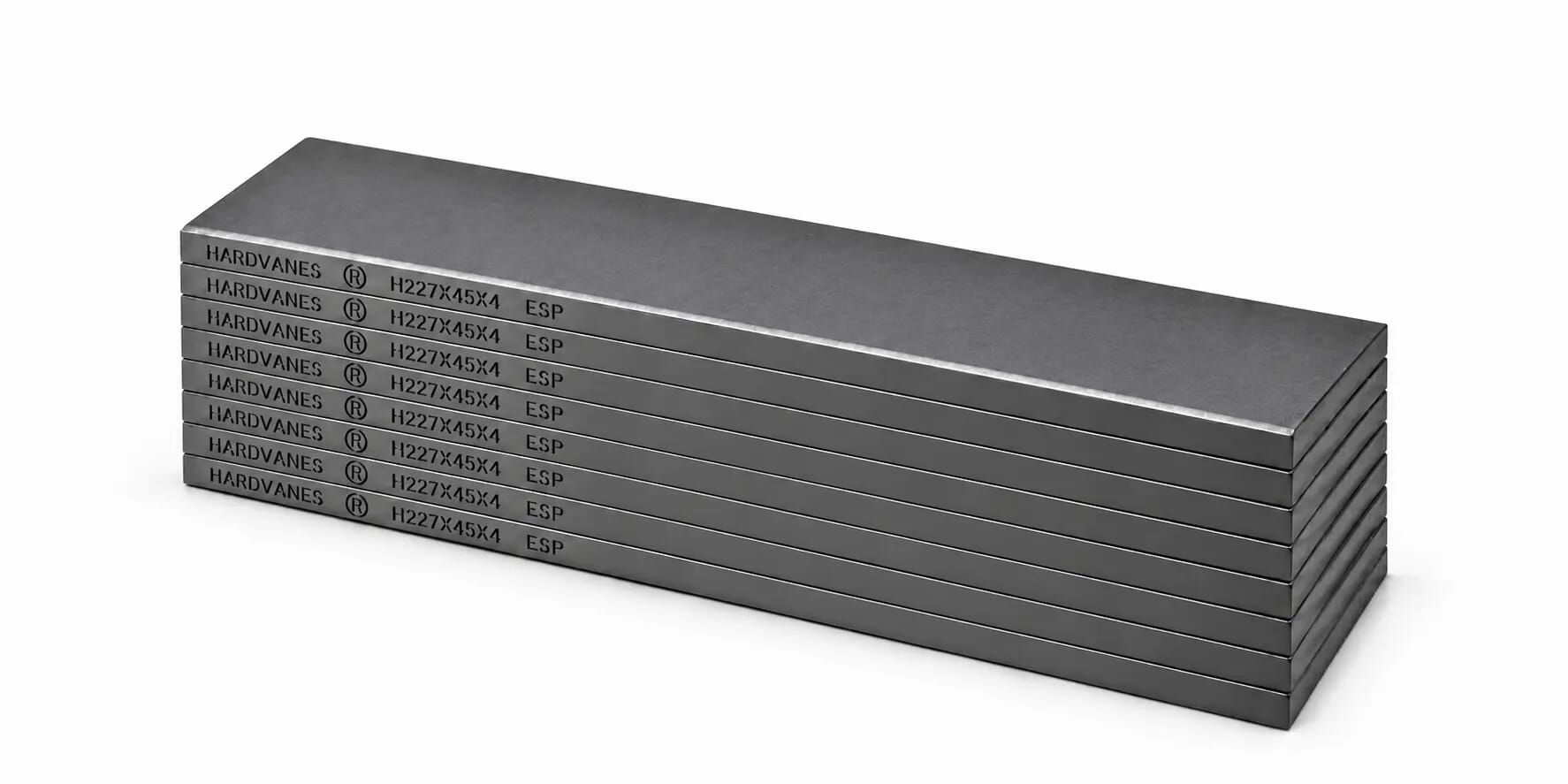 CARBON · GRAPHITE · PRECISION
CUSTOMISE YOUR SPARE PART
Your dimensions
Your material. Your vane
Choose dimensions, graphite grade or fibre type, quantity and edge finish. We will prepare a tailored quotation for your vacuum pump or compressor.
01 / EXTEND EQUIPMENT LIFE
The pump works
Only the vanes are missing
A discontinued vacuum pump does not necessarily have to be replaced. We assess custom vane production using a sample, drawing or available dimensions, taking the actual operating conditions into account.
Explore materials
02 / MATERIALS
The right material
For the right application
Selection depends on pump design, temperature, lubrication and duty cycle.
Carbon graphite
HARDVANES® carbon-graphite vanes, including the EKVAC EVO+ product range, for compatible dry-running vacuum pumps and compressors. Material and geometry are assessed against each machine’s operating conditions.
Epoxy G11++ fibre
Technical composites for certain oil-lubricated pumps and specific mechanical conditions.
Phenolic resins
Reinforced materials for compatible applications, subject to technical assessment.
Special solutions
Assessment of non-standard materials, chamfers and geometries based on equipment requirements.
EPOXY FIBRE · G11++
Another material
The same precision
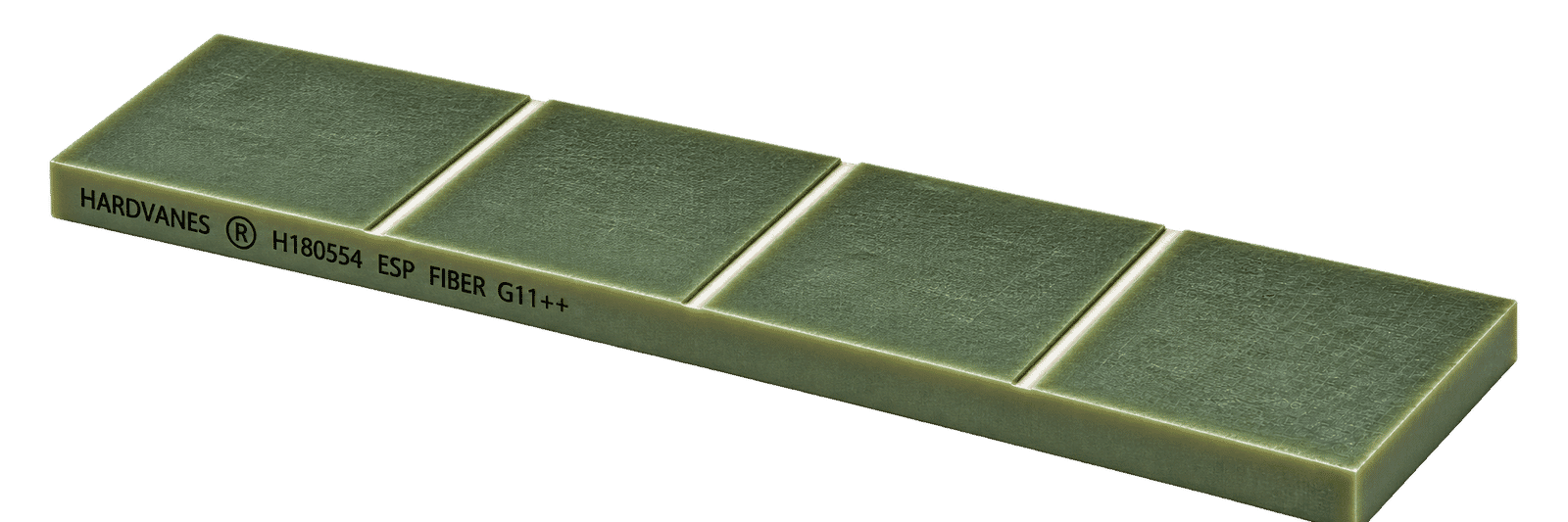
Epoxy G11++ fibre vanes for applications requiring a specific engineered material. The Hardvanes H180554 example shows three transverse grooves on its broad face and edge marking. Compatibility is assessed for each machine.
Configure fibre vanesREFERENCE DESIGN · H180554 · 180 × 55 × 4 MM · THREE GROOVES
03 / DETAILS MATTER
Every tenth.
Every millimetre.
Every rotation.
A vane is not defined by length alone. Thickness, width, edge chamfer, surface finish and material can all affect fit and operational behaviour.
We assess nominal dimensions, orientation, edges and relevant characteristics of your sample or drawing.
Vacuum level, temperature, working environment and lubrication are considered before recommending an option.
04 / A SIMPLE PROCESS
You share the details
We assess the solution
You do not need to know the spare-part number: the pump information is enough to begin the assessment.
Tell us about your equipment
Send the make, model, previous reference and vane dimensions, if available. Photos, drawings and samples are welcome.
Technical review
Our team assesses dimensions, chamfers, materials, operating conditions and quantity. Explore the engineering verification checklist.
Receive a tailored offer
We confirm feasibility, suggested material, quantity, price and estimated lead time, subject to technical verification.
MEASUREMENTS WE NEED
Provide length, width and thickness in millimetres. You must specify whether the pump runs dry (oil-free) or is oil-lubricated so we can verify compatibility. The rotor vane count also helps.
ENGINEERING · PRECISION · FINISH
Technical checks before manufacturing
Assessment starts with the actual machine reference, not an approximate geometry. Every critical feature must be checked against the duty conditions and available technical documentation.
Dimensions and wear
We review length, width and thickness at several points. A worn vane may no longer retain its nominal dimensions, so samples, drawings and the equipment manual are compared before tolerances are agreed.
Chamfers and grooves
We check face, position, direction and number of grooves. The reference G11++ vane has three grooves, whereas the Kevlar example has none. Neither layout is assumed correct for another pump.
Material and lubrication
You must identify whether the pump runs dry or is oil-lubricated. HARDVANES® EKVAC EVO+ carbon graphite, epoxy G11++ fibre and other engineered materials are assessed for the intended application.
Machining and surface finish
We assess precise milling, flatness, parallelism and edge finishing. Fine polishing or a mirror-like finish is considered only when the chosen compound and functional specification allow it.
Minimum manufacturing order: 4 units. Share a drawing or CAD file and request a technical assessment.
THE DETAIL YOUR MACHINE DESERVES
Precision you can rely on, rotation after rotation
Vanes tailored to demanding applications. Dimensions, chamfers and materials are specified from the technical information available for your equipment.
CUSTOM TECHNICAL REVIEW · ACTUAL PRODUCTS
MANUFACTURING & PRODUCT
Different geometries
One commitment to precision
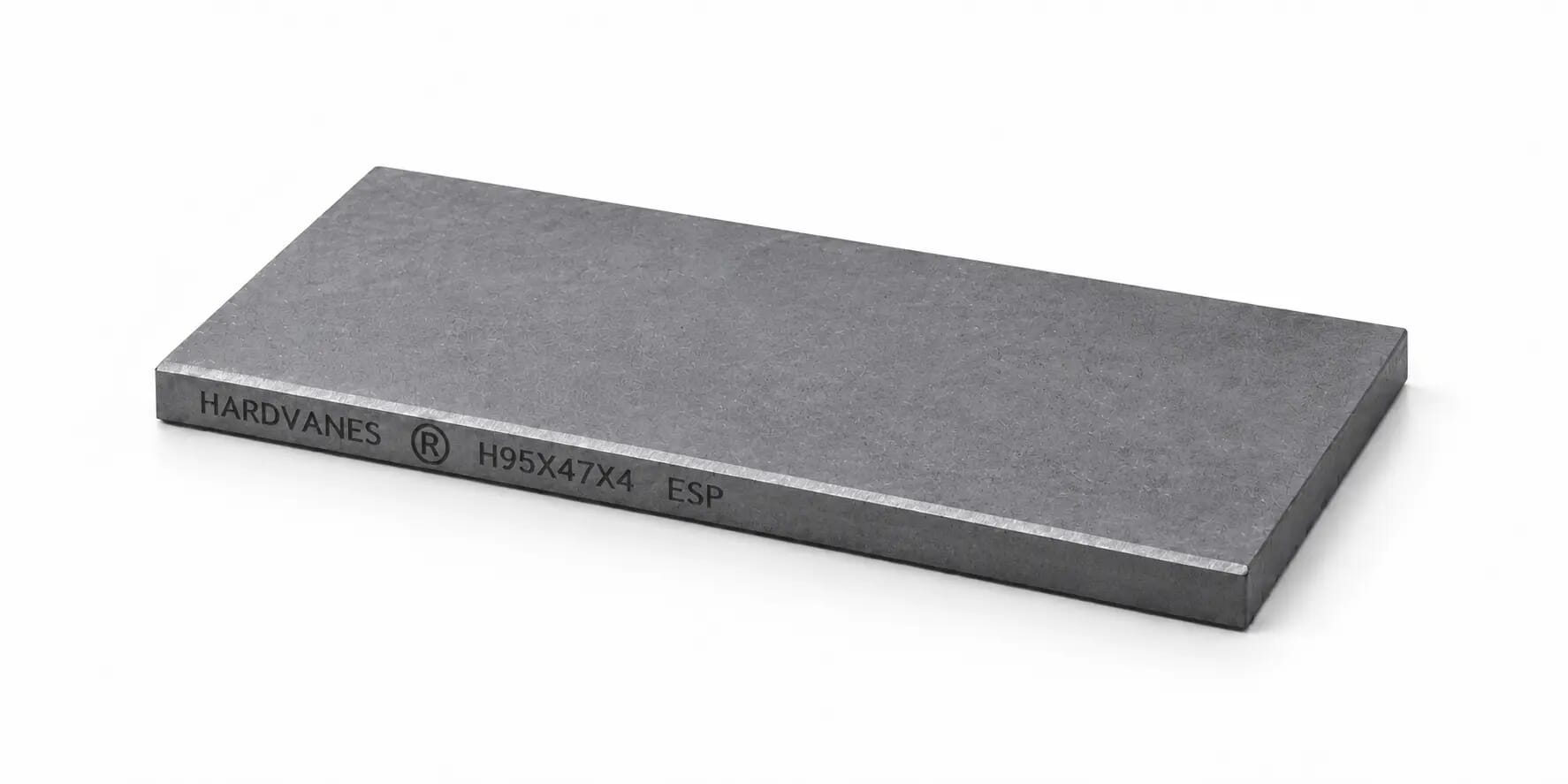
Graphite · compact format
Single 95 × 47 × 4 mm vane with a fine bevel.
Graphite · larger format
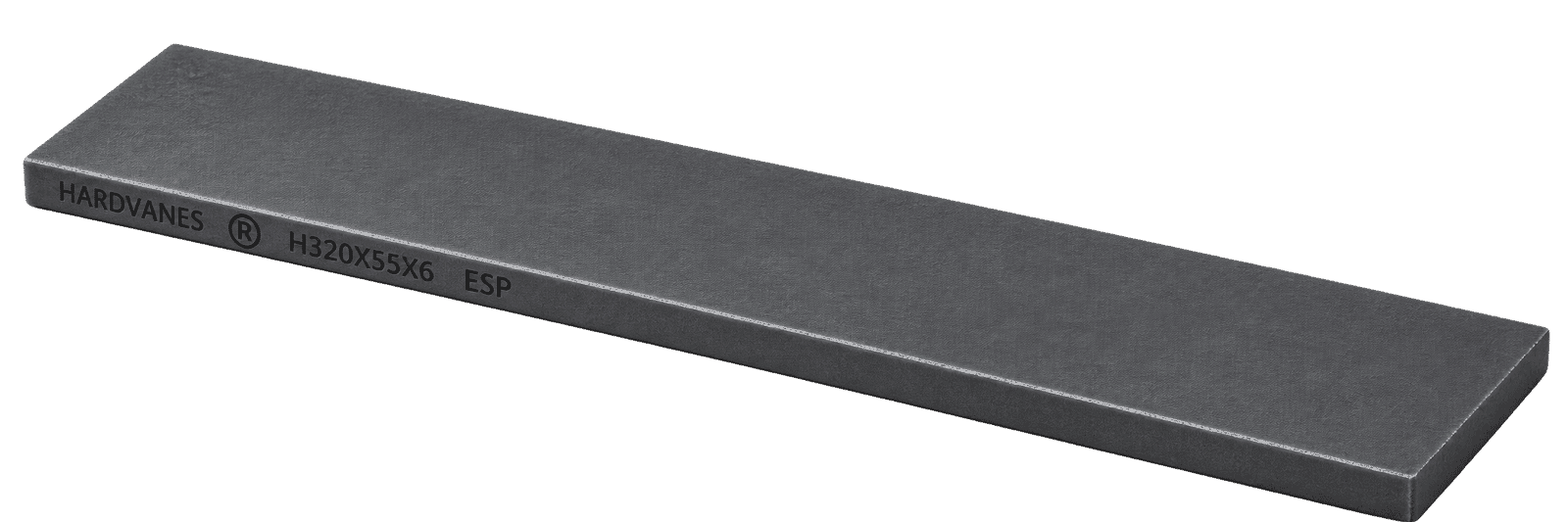
Single 320 × 55 × 6 mm vane with identified edge.
Fibre · three grooves
H180554 reference, 180 × 55 × 4 mm, with three grooves on the broad face.
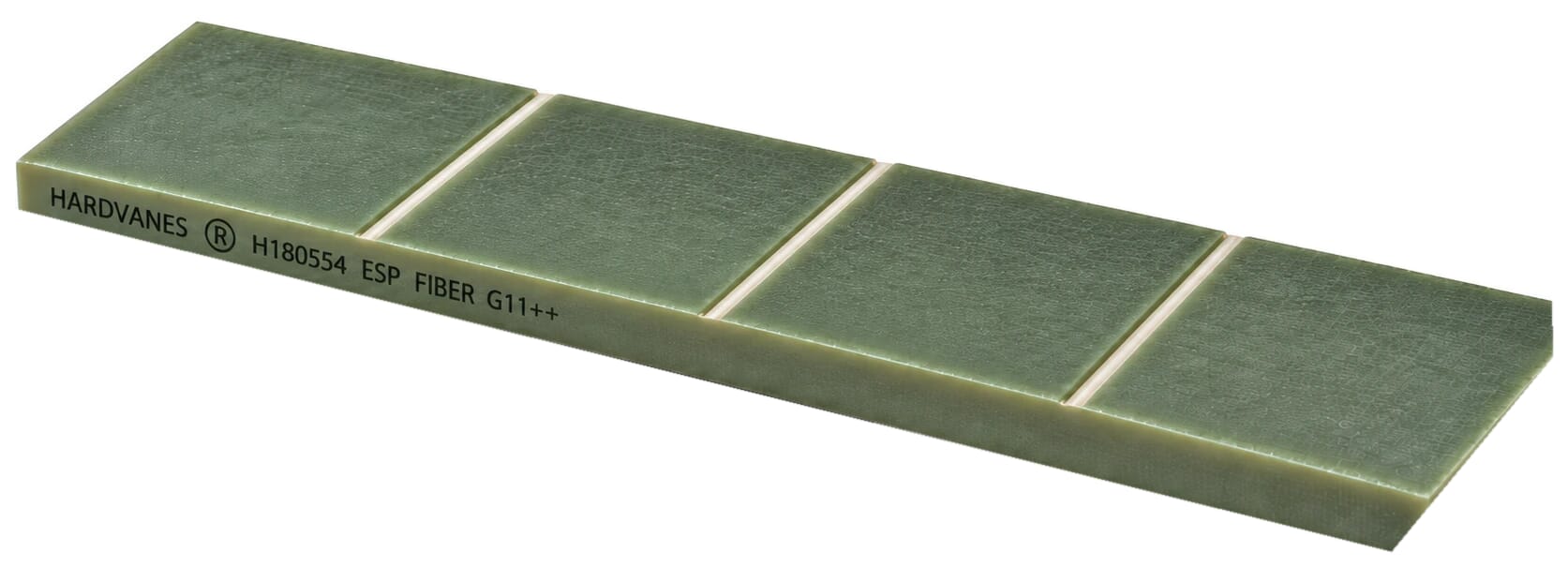
Fibre · finish detail
Alternative representation of the H180554 G11++ vane, 180 × 55 × 4 mm, showing three transverse grooves and edge marking. Geometry is subject to technical approval.
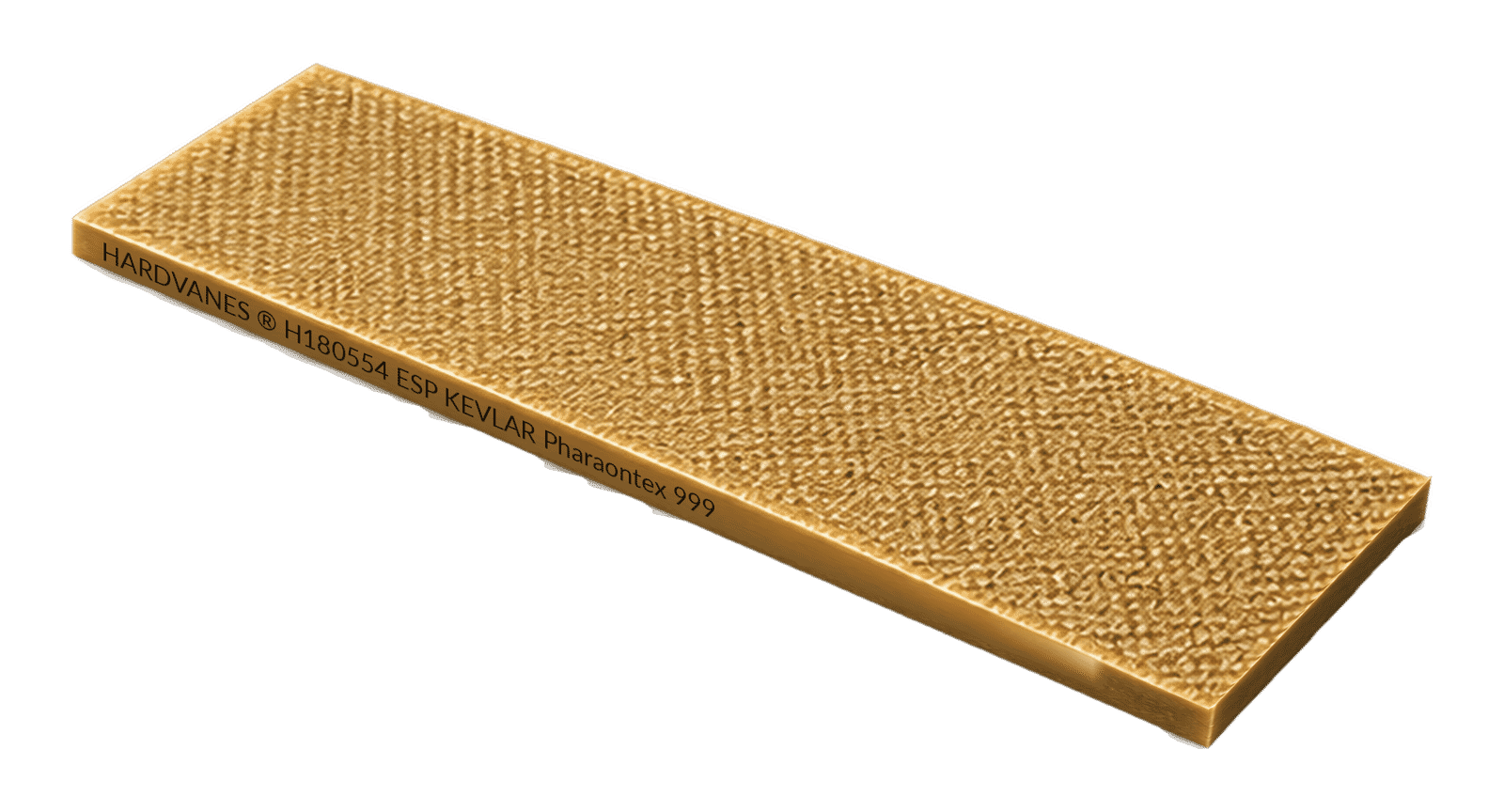
Kevlar · smooth face
Pharaontex 999 H180554 ESP reference vane, without grooves.
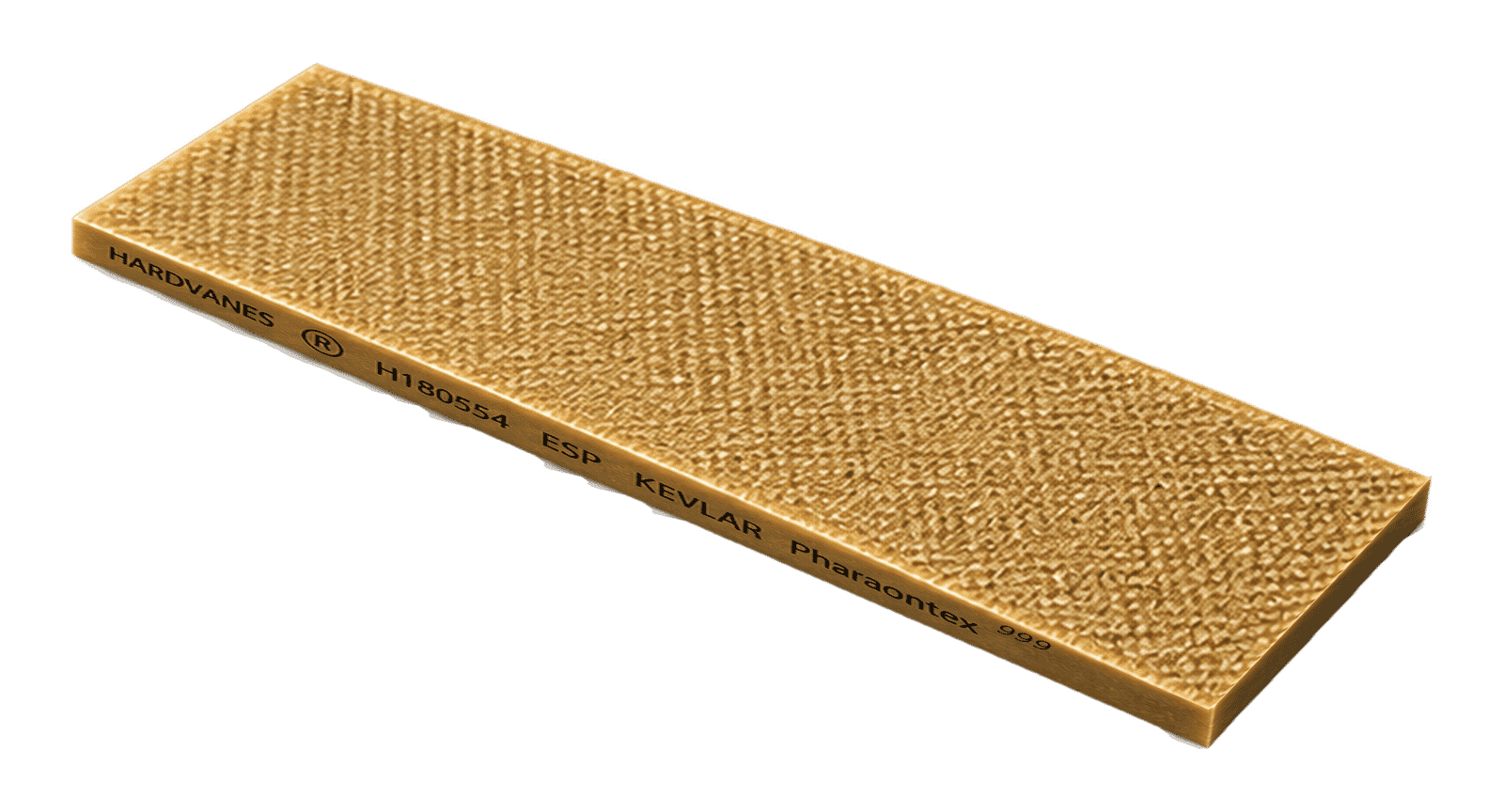
Kevlar · fine profile and edge marking
Alternative view of the H180554 ESP Kevlar Pharaontex 999 vane, showing its fine 4 mm profile and engraved edge. Smooth broad face without grooves.
Six Hardvanes visual examples: two graphite sizes and two detail views each for G11++ fibre and Kevlar. Detail views within each technical material may show the same vane rather than different geometries. Materials, finishes and suitability require technical review. For stocked references, browse the HARDVANES® catalogue by brand (Spanish).
PRECISION IN EVERY SURFACE
Precision machining, milling
and refined surface finishing
Choosing a material is only the beginning. We assess each replacement vane against the machine’s geometry, tolerances, rotor fit and operating conditions before confirming manufacturing feasibility.
Custom-machined graphite vanes
Length, width, thickness, flatness and edge profile are reviewed from an original reference, sample or drawing. Compact and long-format vanes require an appropriate balance of material properties and functional dimensions.
Grooves, chamfers and edge geometry
Transverse grooves, slots and chamfers are produced only where the original design and application require them. Their number, position, orientation and dimensions must match the approved specification; decorative changes are never a substitute for engineering.
Fine polishing and mirror-like surfaces
Fine polishing may reduce machining marks and improve surface uniformity. A mirror-like finish is considered only where the chosen compound permits it; appearance does not replace measured roughness, dimensional accuracy or compatibility.
Need bespoke graphite vanes or technical fibre vanes for a discontinued vacuum pump or industrial compressor? Send the model, dimensions, photos or CAD drawings via the custom vane configurator. Minimum manufacturing order: 4 units. Material, geometry and lead time are subject to technical review.
05 / LET’S START WITH YOUR MACHINE
Can’t find
the vane you need?
Tell us about your vacuum pump or compressor. We will review the details and explain the next steps for your replacement enquiry.
HARDVANES · TECHNICAL GUIDE
Frequently asked questions
Fifteen detailed technical answers about custom vacuum-pump and compressor vanes, materials, dimensions and manufacturing.
Which vane material should I choose?
Carbon graphite is used in many dry-running rotary vane vacuum pumps and compressors. Epoxy G11++ fibre and Kevlar composites are intended for different designs and working conditions. We do not select materials by appearance alone: pump make, model, lubrication, temperature and duty must be assessed before confirming suitability.
Can you manufacture custom dimensions?
Yes. We assess vanes that are not listed in catalogues, difficult-to-source spares and discontinued equipment. We can work from nominal dimensions, an existing sample or a technical drawing. In addition to length, width and thickness, we review the material, bevels, grooves and quantity before confirming feasibility.
How do I know if I need a bevel?
A bevel is a machined feature on one or more vane edges. Its position, direction and geometry may affect installation and movement inside the rotor slot. Not all vanes have a bevel, and there is no universal orientation. If you are unsure, include photographs of both broad faces and the edges.
What are grooves and when are they needed?
These are machined features found on certain technical-fibre vanes. Their number, position and shape depend on the equipment design; they should not be added by default. Our reference G11++ vane has three transverse grooves on its broad face, while the pictured Kevlar Pharaontex 999 vane has none.
What is the minimum manufacturing order?
The minimum order for custom-made vanes is 4 units. You may request 4 or more vanes; we review dimensions, material and application before confirming feasibility, price and lead time. If the equipment manufacturer recommends replacing the complete rotor set, follow that guidance.
How should I measure a vane?
We need three dimensions in millimetres: length (L), width or height (W), and thickness (T). Use a suitable caliper and measure at several points. A worn vane may have lost nominal radial height, so compare the readings with an original reference, drawing or equipment manual whenever possible.
Can you supply vanes for different brands?
We can assess vanes for a range of vacuum-pump and compressor manufacturers, including older models with limited spare-part availability. Brand alone does not establish compatibility. The exact pump reference, geometry, material and operating conditions must be checked before treating a new vane as suitable.
Are custom vanes equivalent to original spares?
A custom vane must reproduce the relevant requirements of the part specified for the equipment, including dimensions, material, finish, bevels and grooves where applicable. Two parts with identical overall dimensions do not necessarily perform identically. We review suitability before quoting rather than claiming universal equivalence.
How long do manufacture and delivery take?
Lead times depend on material availability, machining complexity, necessary checks and the quantity requested. The destination country and shipping method also affect delivery. We provide an estimated manufacturing and dispatch schedule with the quotation after reviewing the request; there is no single lead time for every custom vane.
How long does a vane last?
There is no universal service life expressed in hours. Wear depends on the pump, load, actual operating temperature, rotor-slot condition, cleanliness and vane material. Reduced performance, unusual noise or a measurement outside the manufacturer’s wear limit are reasons to inspect the unit.
How are replacement vanes installed?
Before maintenance, stop the equipment, isolate its power supply and allow it to cool under the applicable safety procedure. Check the rotor, slots and possible wear debris. Bevel orientation and installation sequence vary by model: follow the equipment manufacturer’s instructions and never force the vanes into place. You can also consult our Spanish-language vane replacement and maintenance guide; the equipment manual remains authoritative.
Are the materials suitable for high temperatures or harsh media?
Graphites and composite materials have different thermal, mechanical and chemical properties. A raw material’s temperature rating does not automatically equal the permitted operating temperature of a pump. To assess a suitable vane, we need to know the process, handled medium, lubrication and actual working conditions.
What details do you need for a quotation?
Provide the pump or compressor make and model, previous vane reference if available, length, width, thickness, material and quantity. You must indicate whether the pump runs dry or is oil-lubricated; contact us first if you do not know. Provide photos of both broad faces, bevels and grooves, or a dimensioned PDF drawing. The configurator also accepts CAD, DWG, DXF, STEP, STP, IGES and IGS files (one file, up to 3 MB). These details help us assess feasibility, pricing and expected manufacturing lead time.
Can you reproduce a special design?
Yes. We review special bevels, grooves, machined profiles and other non-standard geometries. A physical sample or dimensioned drawing helps identify critical details. Manufacturing feasibility depends on the shape, material and required tolerances and must be confirmed through technical review.
Do you provide technical guidance?
Yes. We help identify references, check dimensions, explain material differences and prepare custom-vane requests. If a pump has mechanical faults, diagnosis and repairs must be handled by qualified personnel. The aim is to specify a documented replacement appropriate to your application.